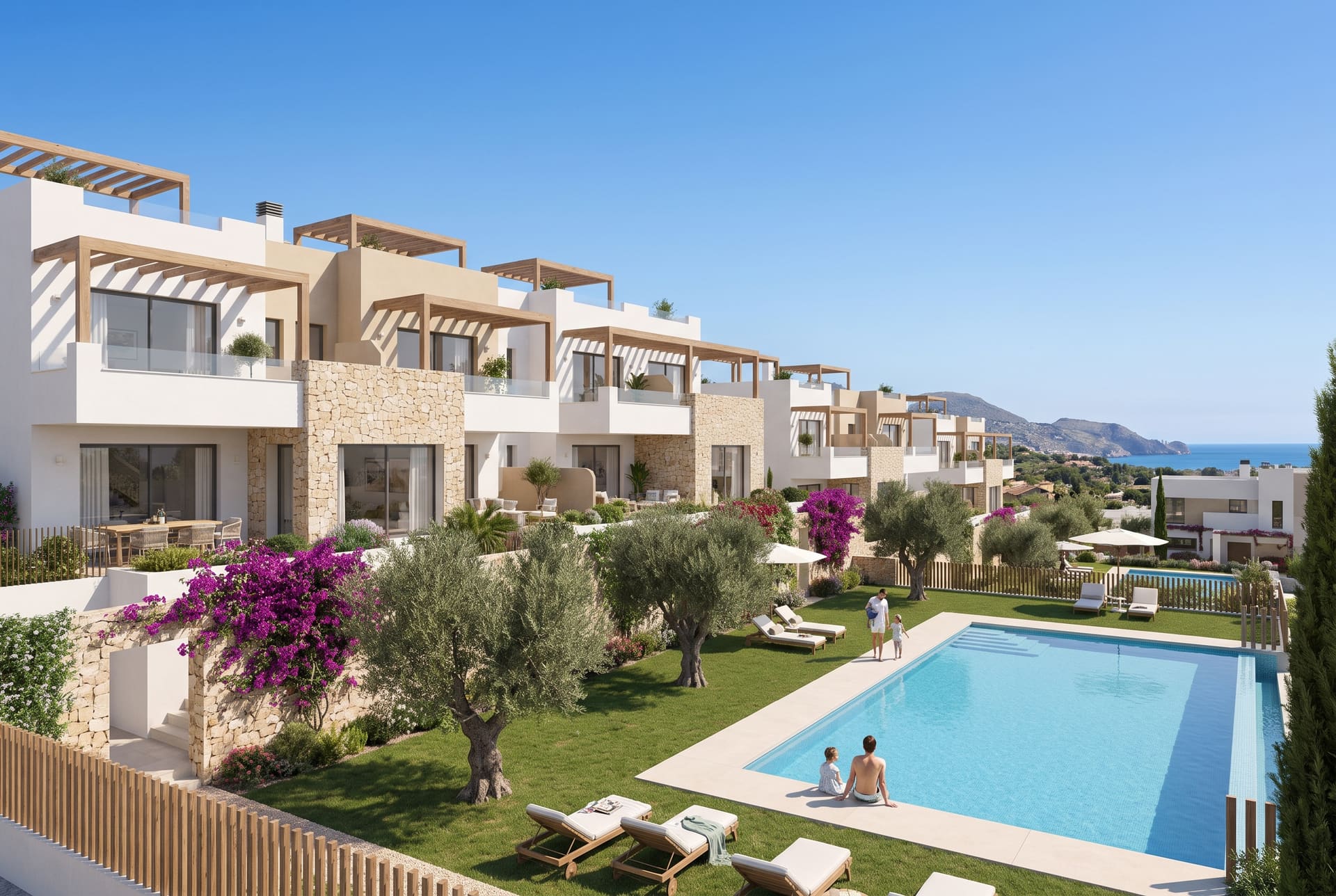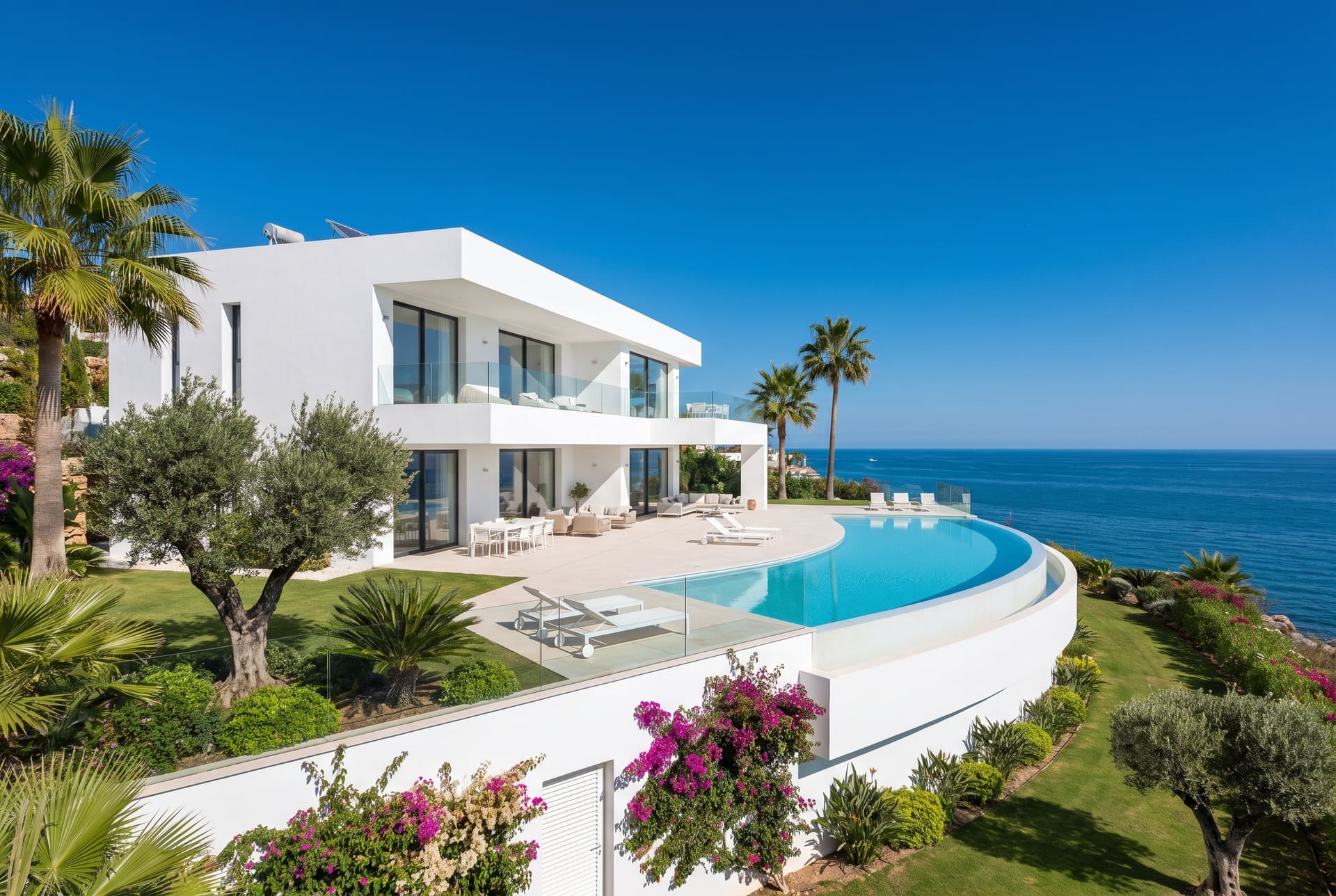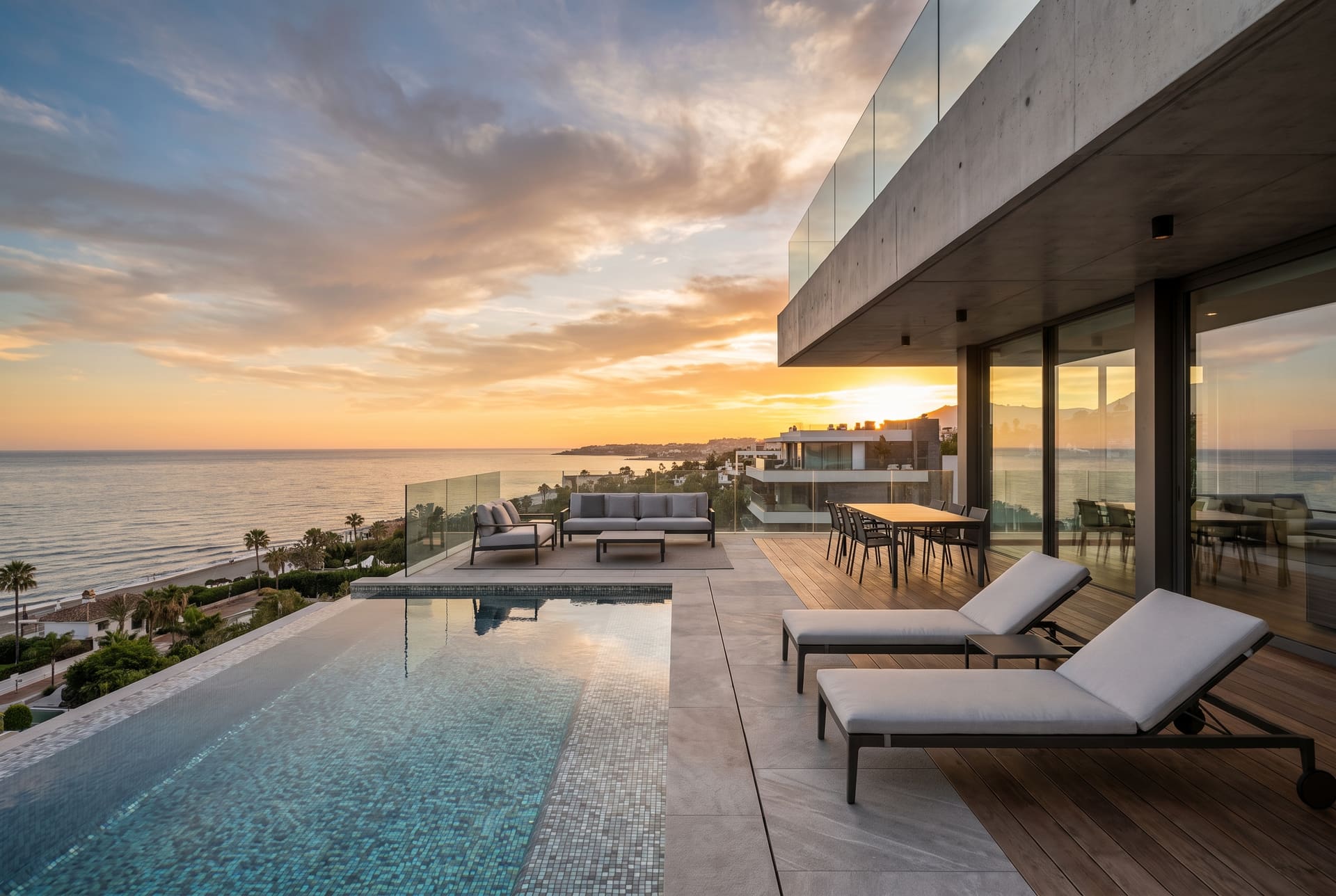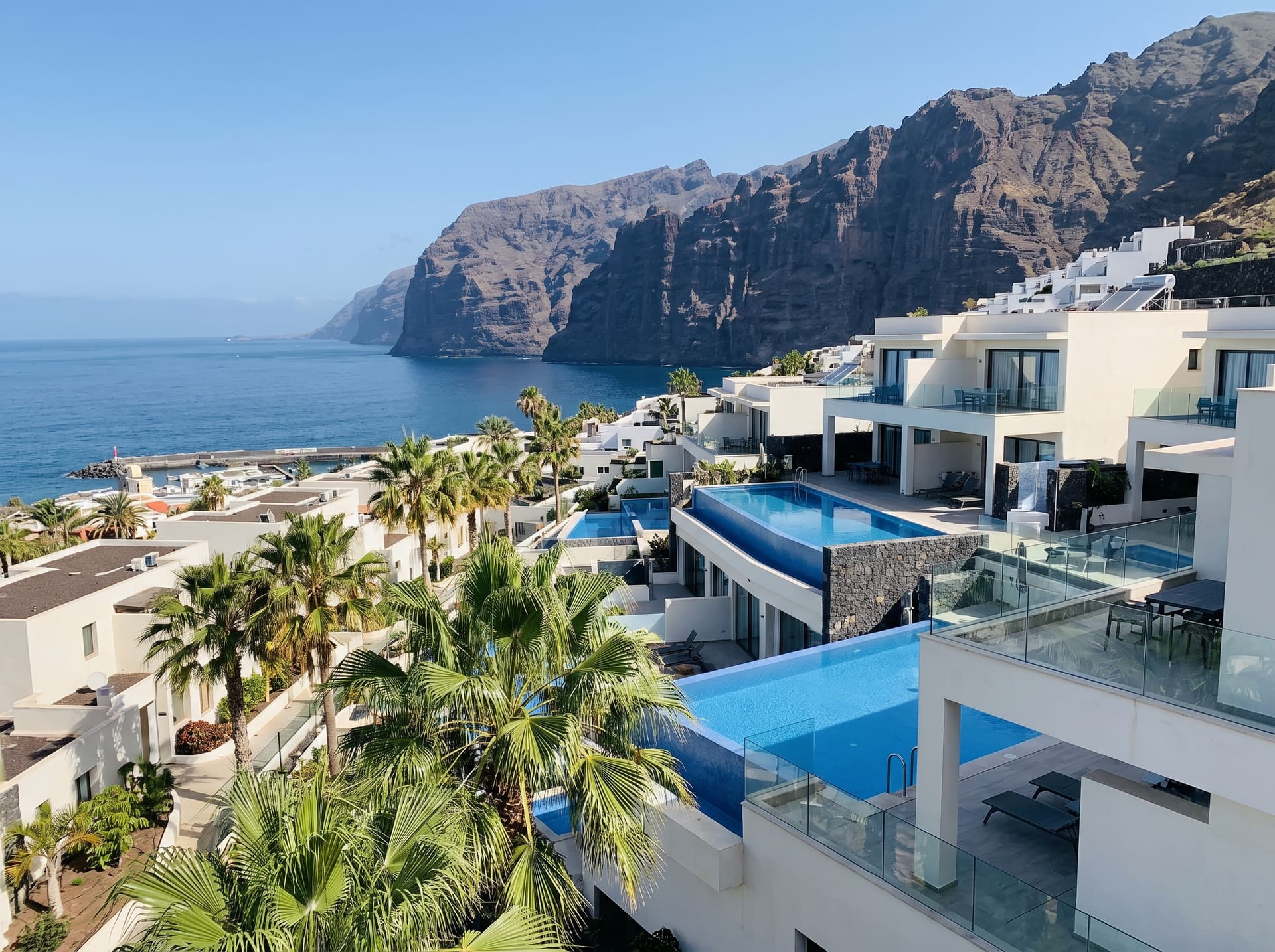
The province of Santa Cruz de Tenerife is the island of Tenerife and a year-round resort market unique in Europe. Buying by the sea on Tenerife means having a tenant in winter, when the mainland is off-season: 8 new-builds across 2 spots on the island’s south.
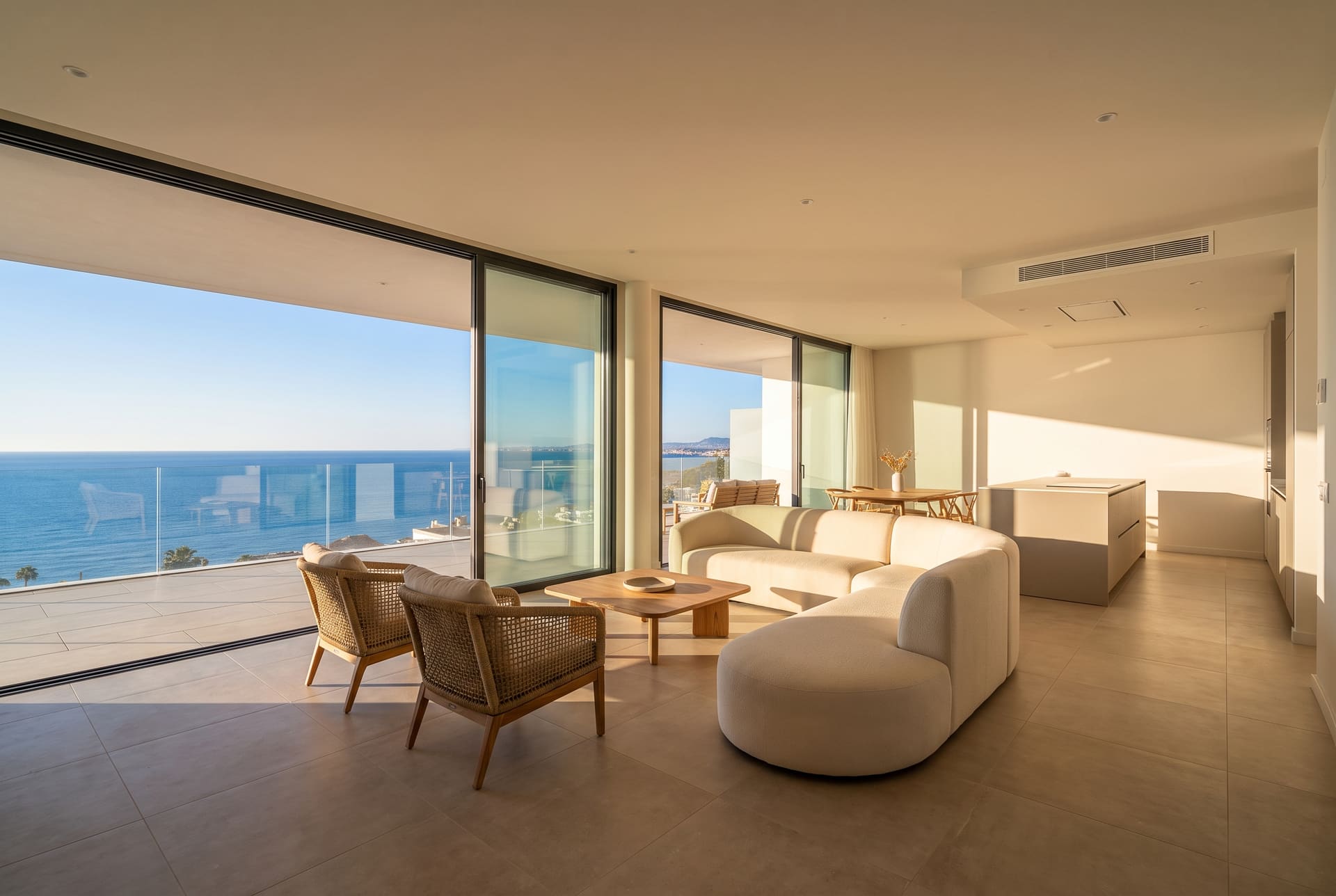
Eternal summer (+22 °C in winter) and Northern-European crowds give a rare mix: €/m² of €3,500–€6,073 with yields up to 6.2% and almost no low season.
| Stadt | Ø €/m² | Rendite | Angebote |
|---|---|---|---|
| Adeje | €5,088 | 5.3% | 4 |
| Playa San Juan | €4,115 | 4.9% | 4 |
aktualisiert 2026-07-09
Nach geschätzter Mietrendite sortiert.
Under construction · 2026 Q36.2% Rendite
Key-ready · Completed5.6% Rendite
Key-ready · Completed5.5% Rendite
Off-plan · 2027 Q25.1% Rendite
Under construction · 2026 Q34.9% Rendite
Off-plan · 2026 Q44.8% RenditeNo dead season is the headline: while mainland resorts empty in winter, southern Tenerife hosts Northern Europeans escaping the cold.
Tenerife is ideal for the holiday-let investor who values year-round occupancy over a summer-only peak.
The island’s south is served by Tenerife South airport (TFS) with international flights; the north by Tenerife North (TFN), mostly inter-island and mainland. It is about 20 minutes from TFS to the Costa Adeje resorts, and the TF-1 motorway links the whole south.
The region is the Canary Islands with their own tax regime: instead of mainland 21% VAT, a local IGIC applies (usually 6.5–7%), and resale ITP is around 6.5% — among Spain’s lowest. That meaningfully lowers turnkey costs — see the detail in the costs calculator.
Kaufnebenkosten berechnen →Offizielle Statistik des spanischen Innenministeriums — registrierte Straftaten je 1.000 Einwohner.
Spanien gehört zu den sichersten Ländern Europas. Touristische Provinzen wirken auf dem Papier höher: Delikte mit Millionen Besuchern werden nur durch die gemeldete Bevölkerung geteilt. Überwiegend handelt es sich um Kleindiebstähle in der Hochsaison; Gewaltdelikte sind selten.
Quelle: Ministerio del Interior, Balance de Criminalidad 2024.
Yield in Santa Cruz de Tenerife province reaches 6.2%. Eternal summer means tenants in winter too: while the mainland empties, the island’s south hosts Northern-European visitors year-round.
There are 8 new-builds from €336,000 to €1,162,000, with €/m² of €3,500–€6,073. The south (Costa Adeje, Los Cristianos) is pricier thanks to tourist demand.
The key difference is climate: the Canaries have no European-style winter, so rentals run all year without the seasonal slumps typical of the Costa Blanca and Costa del Sol.
The island has two: Tenerife South, next to the resort zone, handles the bulk of international arrivals from Europe, while Tenerife North mainly serves mainland Spain and inter-island flights. For an investor the key point is that the southern resorts — Costa Adeje, Los Cristianos — are a short drive from the southern airport.
Practically none — that is the essence of the Canarian model. The peak falls in winter, when Northern Europeans escape the cold; summer is carried by Spanish and family holidaymakers, and the mild climate smooths the shoulder months. Occupancy is spread more evenly across the year than at any mainland resort.